
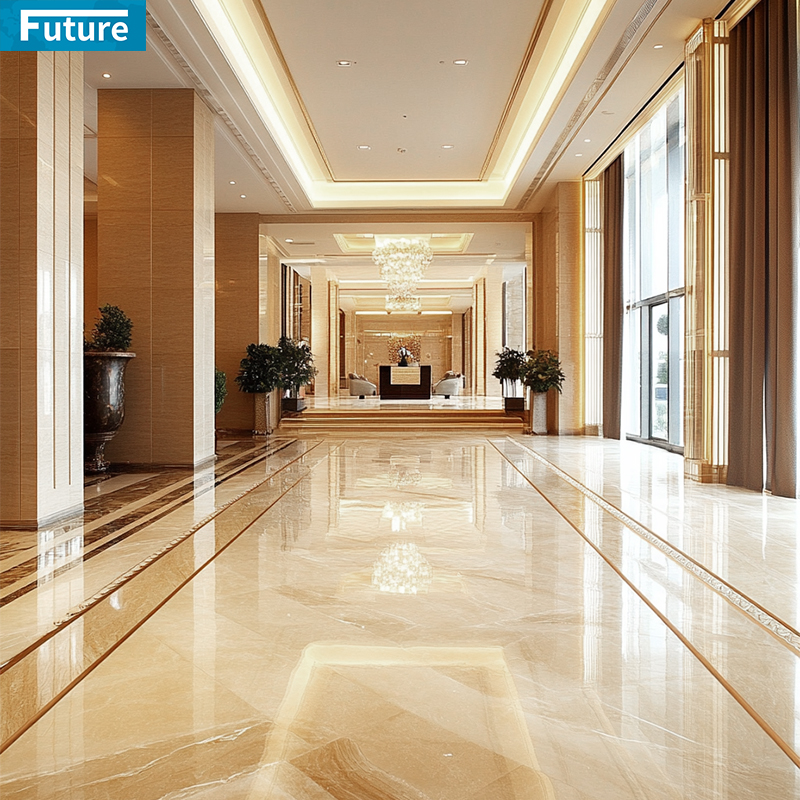
For commercial developers and architectural specifiers, sourcing consistent stone surfaces for large-scale projects is fraught with risks. Natural stone varies wildly from block to block, forcing procurement teams into endless dry-lays to avoid jarring color shifts. Furthermore, high-traffic commercial environments—like hotel lobbies or executive restrooms—quickly destroy porous surfaces through acid etching and deep staining.
Artificial marble (engineered stone) specifically solves this scalability problem. By synthesizing crushed minerals with high-performance polymers, manufacturers deliver absolute batch consistency, zero micro-porosity, and the structural integrity necessary for massive commercial installations. However, specifying engineered stone isn't as simple as picking a color. Failing to match the correct slab thickness to a cantilevered desk, or ignoring thermal expansion coefficients near heat sources, will lead to catastrophic site failures.
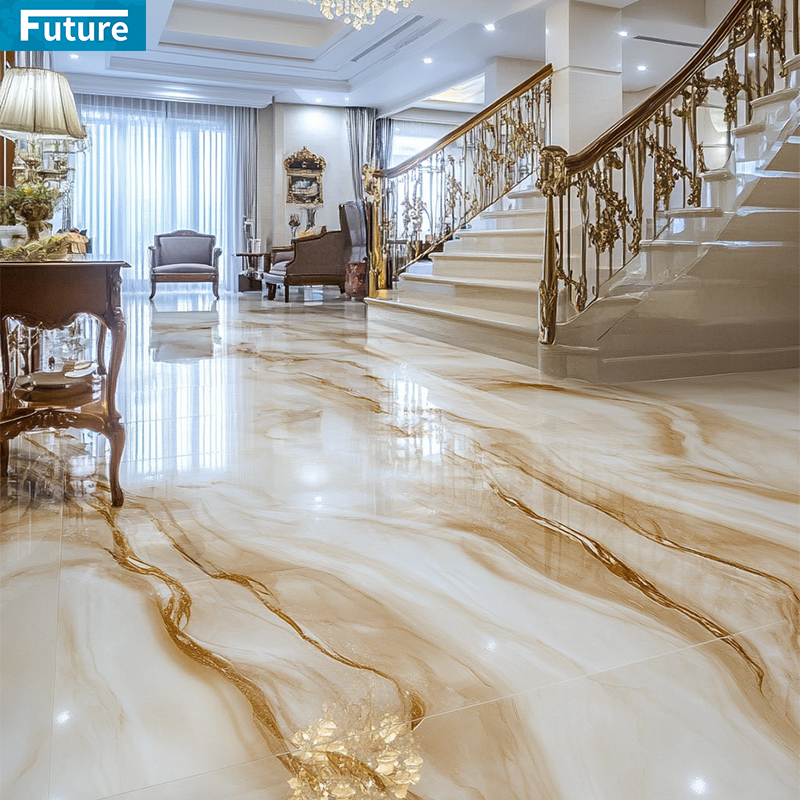
This comprehensive guide delivers the engineering-grade data—from CNC routing properties and shipping container payloads to DCOF slip resistance—that procurement managers need to specify engineered stone with absolute confidence.
Material Composition & Vacuum Vibro-Compression
Unlike natural marble extracted directly from quarries, artificial stone is manufactured using specialized vacuum vibro-compression technology.
The industry standard formulation for 2026 consists of 91% to 93% crushed mineral aggregate (marble dust, quartz, or glass) combined with 7% to 9% high-performance polymer resin binders and inorganic pigments. During manufacturing, the mixture is subjected to intense vibration under a vacuum, followed by high-pressure compression.
Why this matters for specifiers:
- Zero Micro-Pores: This extreme compression eliminates the microscopic voids inherent in natural stone, resulting in a virtually non-porous material that resists severe staining.
Color Fastness: Modern UV-stabilized resins prevent immediate yellowing. However, for direct, unshaded exterior applications, most specifiers pivot away from resin-based products to completely inorganic options like sintered stone or .
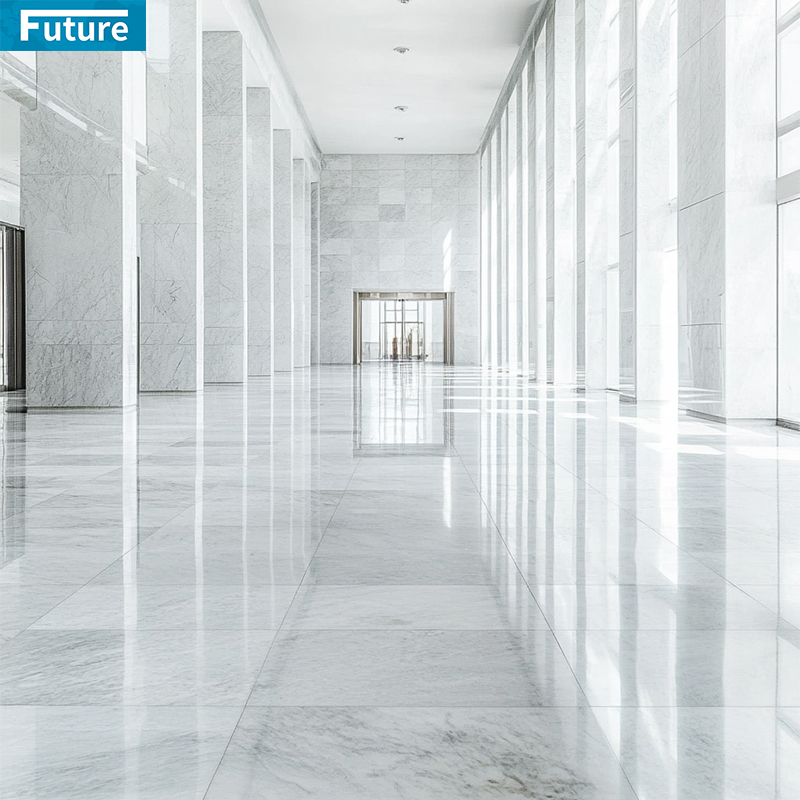
Standard Dimensions and Yield Optimization
Artificial marble offers highly predictable sizing, dropping fabrication waste down to 10–15% (a massive improvement over the 20–30% waste typical of natural slabs). Below are the standard manufacturing formats and their optimal use cases for large-scale procurement:
| Slab Format | Dimensions (mm) | Coverage (sq.m / sq.ft) | Optimal Application Profile |
|---|---|---|---|
| Jumbo / Maximum | 3200 x 1600mm | 5.12 m² (55 sq.ft) | Hotel reception desks, expansive lobby flooring (minimizes seam count). |
| Standard Commercial | 3050 x 1250mm | 3.81 m² (41 sq.ft) | Commercial wall cladding, standard elevator cabs. |
| Mid-Size | 2700 x 1800mm | 4.86 m² (52 sq.ft) | Kitchen islands without center seams. |
| Compact | 2400 x 1200mm | 2.88 m² (30 sq.ft) | Vanity installations, modular residential flooring. |
Specifier's Yield Calculation: When calculating material requirements, divide the total project square footage by the specific slab's usable coverage, then add a 12% buffer for complex edge-matching and intricate cutouts (e.g., commercial drop-in ranges or undermount sinks).
Thickness Matrix & CNC Edge Profiling
Choosing the appropriate slab thickness directly impacts structural loading, CNC fabrication speeds, and overall project cost.
- 12mm (Vertical Applications): Optimal for large-format wall and floor tiles, shower surrounds, and feature walls. Significantly reduces structural loading for high-rise elevator cabs. (Weight: ~30 kg/m²)
- 20mm (Horizontal Standard): The industry baseline for kitchen countertops, bathroom vanities, and moderate-traffic flooring. Excellent balance of strength and weight. (Weight: 50–52 kg/m²)
- 30mm (High-Traffic & Architectural): Specified for heavy commercial flooring, custom stone furniture, and deep-profile edge requirements. (Weight: 75–78 kg/m²)
Fabricator's Note on Edge Profiling:
Because color and particulate dispersion are perfectly consistent throughout the slab, 20mm and 30mm artificial slabs easily accommodate complex CNC routing. Bullnose, half-bullnose, and ogee edges can be routed quickly without exposing a mismatched core. For drop-aprons or massive stone dining tables, a 45-degree mitered core bonded with color-matched acrylic epoxy creates a perfect monolithic appearance that is incredibly difficult to achieve with the unpredictable veining of natural stone.
Surface Finishes & DCOF Performance
Surface finish dictates light reflectance, slip resistance, and maintenance cycles. The data below synthesizes expected Dynamic Coefficient of Friction (DCOF) values necessary for ADA and commercial safety compliance.
| Finish Type | Visual Characteristic | Dry DCOF | Wet DCOF | Recommended Application |
|---|---|---|---|---|
| Polished | High-gloss, mirror-like | 0.42 – 0.50 | 0.35 – 0.42 | Vertical features, low-traffic luxury lobbies, vanities. |
| Honed | Matte satin, diffuses light | 0.50 – 0.60 | 0.45 – 0.55 | Office flooring, retail environments, contemporary countertops. |
| Leathered | Tactile, dimensional | 0.55 – 0.65 | 0.50 – 0.60 | High-traffic counters, casual dining tables. |
| Brushed | Aggressive texture | 0.65 – 0.75 | 0.60 – 0.70 | Spa areas, pool decks (covered), transition zones. |
Technical Performance & Thermal Dynamics
Quality artificial marble must meet strict physical performance thresholds. Materials failing these minimums should be outright rejected for commercial horizontal applications:
- Water Absorption: 0.02% – 0.15%. Premium quartz-based engineered stones achieve <0.05% (impervious). Standard marble-resin combos should not exceed 0.15%.
- Flexural Strength: 22 MPa – 35 MPa (for marble-based engineered stone). High-quartz ratios can achieve up to 50–70 MPa—crucial for console tables or unsupported overhangs exceeding 300mm.
- Density: ~2.40 – 2.70 g/cm³. Drives load-bearing calculations for structural engineers.
- Thermal Expansion Coefficient: Artificial marble/quartz generally exhibits a linear coefficient ranging between 13-16 × 10⁻⁶/°F, whereas natural marble ranges from 5-12 × 10⁻⁶/°F.
- Critical Installation Insight: Because engineered stone expands under heat noticeably faster than natural stone, highly flexible 100% silicone must be used for perimeter expansion joints. Rigid epoxy pinned tightly in corners near intense heat sources (like commercial cooktops) will inevitably lead to stress fractures.
Global Shipping Logistics & Container Packing
For international procurement, calculating 20ft container payloads is strictly bound by weight restrictions rather than volumetric space. A standard 20ft shipping container has a maximum practical safe load of 22,000 to 25,000 kg for stone transport.
All slabs are shipped in heavy-duty, fumigated ISPM-15 compliant wooden A-frame bundles, with dense foam padding separating individual faces to prevent friction burn during turbulent ocean staging.
Typical 20ft Container Yield (Based on 25,000 kg limit):
- 20mm Slabs (~260-280 kg per slab): Roughly 70 to 85 slabs per container, packaged across 6 to 8 wooden bundles. Total coverage: ~420–500 m².
- 30mm Slabs (~340-420 kg per slab): Roughly 50 to 65 slabs per container, packaged across 6 to 8 wooden bundles. Total coverage: ~270–300 m².
Commercial Specification Use Cases
- Large Format Cladding (Lobbies): Substrate flatness is paramount; ensure wall surface variations do not exceed 3mm over a 3-meter span for 12mm panels to prevent telegraphing and eventual cracking under building settling.
- Commercial Kitchen & Bar Tops: Require documentation proving chemical resistance (pH 3-11). Specify 20mm or 30mm honed slabs; high-gloss polished surfaces will quickly show micro-scratches from dishware impact in high-volume settings. If extreme heat exposure is anticipated (e.g., flambe stations), substitute with alternatives, as the polymer resin inside artificial marble can scorch above 150°C (300°F).
- Pillar and Curve Cladding: Because artificial marble can be thermoformed (at highly specific temperatures) without fracturing, it is vastly superior to natural stone for wrapping structural lobby columns seamlessly.
Remediation & Restoration Protocols
Unlike ceramic or sintered tiles, artificial marble can be field-repaired and re-polished if severely damaged. For high-traffic areas exhibiting micro-scratches or severe acid etching:
- Abrasive Sequence: A professional restorer will use diamond-impregnated resin pads on a variable-speed rotary tool.
- Grit Progression: Begin at 400 grit to cut past the scratch, followed by 800, 1500, and finally 3000 grit to restore the factory gloss.
- Coolant Necessity: This process must be done wet. Dry polishing generates excess friction heat which will melt the polymer resin matrix, permanently scorching the stone.
Quality Control & Site Acceptance Standards
Implement the following QC protocols immediately upon delivery at the job site to intercept fabricated failures before they are installed:
- Gloss Meter Verification: For polished slabs, surface reflectivity should not vary by more than ≤5% across the entire slab face.
- Resin Pooling Detection: Inspect surfaces using an oblique (raking) flashlight. Reject slabs that display hazy, translucent resin puddles without aggregate—these create fragile structural weak points.
- Batch Consistency for Book-Matched Slabs: Commercial orders spanning more than 50 m² must be drawn from the exact same manufacturing production run to prevent subtitle monolithic color shifting (especially obvious in pure white and light beige varieties).
- Micro-Fracture Inspection: Closely examine all 90-degree outer edges. Hairline stress fractures suffered during transport will rapidly propagate under the aggressive vibration of a CNC bridge saw.
Expert Consultation for Your Next Project
Procuring artificial marble at scale requires a deep understanding of structural loads, shipping constraints, and fabrication limits. Relying on generic specifications leads to costly site failures and delayed installations.
At Future Stone Group, we bridge the gap between architectural vision and manufacturing reality. From ensuring strict batch consistency on 3200x1600mm jumbo slabs to customizing edge profiles for hospitality furniture, our team provides the engineering oversight required for flawless execution.
If you are specifying engineered surfaces for an upcoming commercial development, luxury residential build, or custom furniture line, contact our specification team today to request physical samples, exact thermal dynamics data, and detailed container payload calculations tailored to your project.
Artificial marble slab sourcing checklist
Before ordering artificial marble slabs, confirm slab size, thickness, finish, MOQ, cut-to-size drawings and export packing so the factory can quote yield, processing time and crate method accurately. This is especially important for kitchen countertops, bathroom vanities, shower walls, floor tiles and commercial wall panels where repeatable color and installation tolerance matter.
- Compare engineered stone options in the artificial marble and quartz slab hub before selecting a color series.
- Use the quartz artificial marble guide when the project needs low-silica or zero-silica options.
- Send drawings, thickness, finish, quantity and destination details through FutureStone contact for a project quotation.
Artificial marble slab specification, MOQ and RFQ handoff guide
This page already explains artificial marble slab sizes, finishes and project uses. The procurement step is to turn that information into a supplier-ready handoff: material type, slab size, thickness, finish, color consistency, MOQ, drawings, inspection and export packing. Keep this slab page focused on ordering artificial marble slabs; use What Is Artificial Marble? for the material definition and Artificial Marble for Kitchen and Bathroom for application-specific countertop, vanity and shower-wall planning.
Artificial marble slab specification matrix
| Specification item | What to confirm | Why it matters |
|---|---|---|
| Material type | Acrylic artificial marble, cultured marble, engineered marble or quartz-based artificial stone | Controls surface feel, fabrication method, maintenance expectation and price comparison. |
| Slab format | Standard slab size, thickness, finish, color code, batch number and usable yield | Helps estimate kitchen tops, bathroom vanities, wall panels, floor tiles and commercial panels accurately. |
| Color consistency | Current slab photos, sample approval, lot range and acceptable shade tolerance | Reduces mismatch when one order covers multiple rooms, repeat units or hotel corridors. |
| Fabrication scope | Full slabs, cut-to-size pieces, CNC cut-outs, edge profile, drain or sink openings and shop drawing approval | Separates simple slab supply from a fabricated project package. |
| Export delivery | MOQ, lead time, inspection photos, wooden crate marks, packing list, weight and loading photos | Keeps purchasing, shipping and site receiving teams aligned before the order ships. |
Project uses and quotation boundaries
Artificial marble slabs can be quoted as raw slabs, cut-to-size panels or fabricated project pieces. Define the boundary at the RFQ stage so the supplier prices the same scope you need on site.
- Kitchen countertop projects: send island size, perimeter top size, backsplash height, sink and hob cut-outs, edge profile, joint positions and finish preference. See kitchen countertop projects for broader project context.
- Bathroom vanity and wet-wall projects: confirm vanity top dimensions, basin cut-outs, shower-wall panel size, thickness, splash pieces, hole positions and cleaning expectations.
- Commercial wall or floor panels: confirm panel modules, wall elevations, floor layout, expansion joints, color tolerance, replacement pieces and installation sequence.
- Furniture and display uses: confirm tabletop size, base connection, edge detail, underside reinforcement, weight, packing marks and final delivery route.
MOQ, samples and shop drawing workflow
Before confirming an artificial marble slab order, ask the supplier to separate the sample stage, production lot and fabrication documents. A sample can approve tone and finish, but the actual production batch still needs current photos and clear tolerance.
- Sample approval: confirm color, pattern, finish, thickness, maintenance expectation and whether the sample represents the current production batch.
- MOQ and lead time: record minimum order quantity by slab, square meter or fabricated piece, plus mold, color or batch requirements for custom colors.
- Drawing approval: provide shop drawing files for cut-to-size work, CNC openings, edge profiles, wall panels, vanity tops and countertop layouts.
- Production QC: request slab photos, dimensional checks, finish checks, color-range photos, surface repair notes and piece labels before packing.
- Delivery handoff: match the packing list, crate mark, gross weight, piece label and loading photo to the project schedule before shipment.
Artificial marble slab RFQ handoff checklist
Send a complete RFQ package so artificial marble slab quotations can be compared on material, fabrication and delivery scope:
- Material request: artificial marble type, color target, slab size, thickness, finish, pattern direction, current slab photos and acceptable batch variation.
- Quantity and MOQ: total slabs or square meters, spare allowance, sample requirement, minimum order quantity, repeat-order plan and required delivery date.
- Fabrication scope: full slab only, cut-to-size, CNC, edge profile, sink or drain cut-outs, wall-panel layout, countertop layout, vanity top details and shop drawing files.
- Quality proof: sample approval, batch photos, dimensional inspection, color tolerance, surface repair notes, label method and pre-shipment photos.
- Packing and shipping: wooden crate requirement, crate mark, packing list, gross and net weight, loading photos, destination, Incoterm and unloading responsibility.
For category-level options, review Artificial Marble and Quartz Slabs. For fabricated project surfaces, compare wall and floor tiles, kitchen countertops and send FutureStone the slab specification, drawings and destination for a quotation.
FAQ
What information is needed to quote artificial marble slabs?
A clear RFQ should include material type, color, slab size, thickness, finish, quantity, MOQ expectation, drawings, fabrication scope, cut-outs, edge profile, QC requirements, packing method, destination and delivery term.
Can artificial marble slabs be supplied as cut-to-size pieces?
Yes. Artificial marble slabs can be quoted as full slabs or cut-to-size pieces when the buyer provides shop drawing files, finished dimensions, openings, edge details, tolerance, labels and packing requirements before production.
How should buyers control color consistency for artificial marble slab orders?
Approve current slab or batch photos, record the color code, sample, finish and acceptable shade tolerance, and ask for pre-shipment photos before packing. Larger projects should reserve enough material from the same batch when possible.
Need a material or project recommendation?
Share the page, material target or project requirement with our team.