
"Will it stain?" is the question that stops 90% of potential marble kitchen buyers in their tracks. The internet is full of worst-case horror stories. But the reality is more nuanced — and more manageable — than the scare articles suggest.
Here's the honest, complete truth.
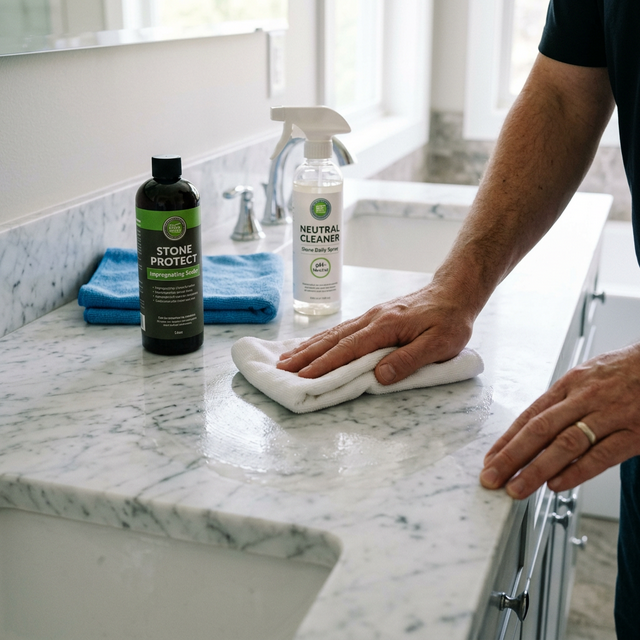
Staining vs Etching: The Critical Distinction
Most people confuse two completely different things. Understanding the difference changes the entire conversation.
| Staining | Etching | |
|---|---|---|
| What it is | A substance is absorbed into the stone through its pores, leaving a discolored spot | The surface is chemically reacted by acid, causing a dull spot |
| Caused by | Oil, wine, coffee, turmeric, rust — any colored liquid left sitting | Lemon, vinegar, tomato sauce, wine, cola — any acidic substance |
| Appearance | Darker or colored spot that doesn't match surrounding marble | Light-colored dull spot (on polished marble); ring mark |
| Depth | Subsurface — the pigment is inside the stone | Surface only — the top polish is dissolved |
| Prevention | Sealing blocks pores; wiping spills quickly | Sealing does NOT prevent etching — it's a chemical reaction |
| Repair | Poultice treatment (draws the stain out) | Marble polishing powder ($15, 5-minute fix) or professional re-polish |
| Permanent? | Usually removable with correct treatment | 100% repairable — re-polishing restores the surface |
The key takeaway: Most "stains" people complain about on marble countertops are actually etch marks — dull spots from acid contact. Etch marks are surface-level and fully repairable. True deep stains are much rarer when marble is properly sealed.
What Actually Happens: Common Kitchen Scenarios
| Scenario | What Happens | Prevention | Fix |
|---|---|---|---|
| Lemon juice sits for 3 minutes | Etch mark — dull ring on polished surface | Wipe immediately | Marble polishing powder ($15) — 5 min repair |
| Red wine sits for 30 minutes | Etch mark (from acid) + possible stain (from pigment) | Wipe immediately; sealed marble resists stain | Polish for etch; hydrogen peroxide poultice for stain |
| Olive oil splatter left overnight | Oil stain — dark spot | Wipe cooking splatter after cooking | Baking soda + acetone poultice — 24 hr treatment |
| Coffee cup ring (daily) | Etch + minor stain on polished surface | Use coaster; wipe drips | Polish for etch; poultice if stained |
| Turmeric paste | Bright yellow stain — very visible on white marble | Avoid placing directly on marble; use cutting board | Hydrogen peroxide poultice (may need 2–3 applications) |
| Tomato sauce sits for 10 minutes | Etch ring only (sauce is acidic) | Wipe immediately | Marble polishing powder |
| Water rings | Not a stain — evaporates. May leave mineral deposits on dark marble | No prevention needed | Wipe with damp cloth |
The 3-Layer Defense System
Layer 1: Sealing (Blocks Stains, Not Etch)
| Action | Detail |
|---|---|
| Product | Impregnating (penetrating) stone sealer (Tenax Proseal, StoneTech BulletProof) |
| Frequency | Every 6 months for kitchen countertops |
| What it does | Fills microscopic pores → liquids bead on the surface instead of absorbing |
| What it doesn't do | Does NOT prevent acid etching (a surface chemical reaction, not absorption) |
| Application time | 15 minutes per countertop |
Layer 2: Finish Selection (Hides Etch Marks)
| Etch Visibility | Kitchen Recommendation | |
|---|---|---|
| Polished | ⚠️ High — etch marks are very visible (dull spots on mirror surface) | Beautiful but highest maintenance |
| Honed | ✅ Low — etch marks barely visible on matte surface | Best balance of beauty and practicality |
| Leathered | ✅ Very low — textured surface camouflages etching completely | Most forgiving for heavy kitchen use |
Expert recommendation: For kitchen countertops, specify honed or leathered finish. You get the beauty of natural marble without the stress of visible etch marks.
Layer 3: Habits (Daily Behavior)
| Habit | Time Required | Impact |
|---|---|---|
| Wipe acid spills within 1–2 minutes | 10 seconds | Prevents 95% of etch marks |
| Use cutting boards for food prep | 0 extra seconds (you should anyway) | Prevents scratches |
| Use trivets under hot cookware | 5 seconds | Prevents thermal stress |
| Clean with pH-neutral stone cleaner (not Windex, not vinegar) | Same time as any cleaning | Prevents daily micro-etching |
Dark vs Light Marble in Kitchens
| Factor | White Marble | Dark Marble (Black Marquina, Forest Green) | Beige Marble (Shanna Beige) |
|---|---|---|---|
| Etch visibility | High on polished, low on honed | Low — etching less visible on dark stone | Very low — warm tones camouflage etching |
| Stain visibility | Medium — dark stains show on white | Water marks and fingerprints show easily | Low — best overall for hiding daily wear |
| Maintenance level | Medium-High | Medium (dust shows, but stains hide) | Low — most forgiving color |
| Best kitchen finish | Honed or leathered | Leathered (reduces fingerprints) | Honed or leathered |
The Patina Perspective
Here's a perspective that changes the entire conversation:
Professional chefs, European bakers, and Italian grandmothers have used marble countertops for centuries. Not because they don't etch — they do. But because the etch marks, light scratches, and gentle aging create a patina that tells the story of thousands of meals.
The same Carrara marble that counters a Parisian pâtisserie has been etched by a century of butter, lemon, and flour — and it's more beautiful for it.
If you want a surface that looks factory-new in 20 years, choose . If you want a surface that becomes more beautiful and personal with time, choose marble.
FAQs
What's the worst thing that can happen to a marble countertop? The worst realistic scenario: turmeric paste left overnight on unsealed white marble creates a deep yellow stain that requires 2–3 poultice treatments over a week to fully remove. Annoying? Yes. Permanent? No. Structurally damaging? Absolutely not.
Can I really fix etch marks myself? Yes — marble polishing powder (tin oxide, available online for $10–20) restores etch marks on polished marble in about 5 minutes. For honed marble, a damp cloth and light buffing is usually sufficient.
Do professional kitchens use marble? Many do — especially for pastry stations (marble stays cool, ideal for rolling dough) and decorative front-of-house surfaces. Professional kitchens typically use honed and accept patina as part of the material's character.
Does the color of marble affect stain visibility? Yes — lighter marbles show stains more visibly, but darker marbles show etching more. For maximum practicality with minimal visible wear, consider mid-tone marbles like Monalisa Beige or warm creams that naturally mask both stains and etch marks.
Marble Color & Stain Visibility Guide
| Marble Color | Stain Visibility | Etch Visibility | Best Strategy |
|---|---|---|---|
| Bright white (Calacatta White) | ⭐⭐⭐⭐⭐ Highly visible | ⭐⭐ Low (matte etch on white is subtle) | Seal frequently; wipe immediately; embrace patina |
| Grey-veined white () | ⭐⭐⭐ Moderate (veins camouflage) | ⭐⭐ Low–moderate | Best balance of beauty + practicality |
| Warm cream / beige (Monalisa Beige) | ⭐⭐ Low (tone hides most discoloration) | ⭐⭐ Low | Very forgiving — ideal for heavy-use kitchens |
| Dark (Black Marquina) | ⭐ Minimal (dark surface hides stains) | ⭐⭐⭐⭐ Highly visible (light etch marks on dark surface) | Use honed finish to minimize etch visibility |
| Green (Emerald Green) | ⭐⭐ Low | ⭐⭐⭐ Moderate | Deep color tolerates everyday wear well |
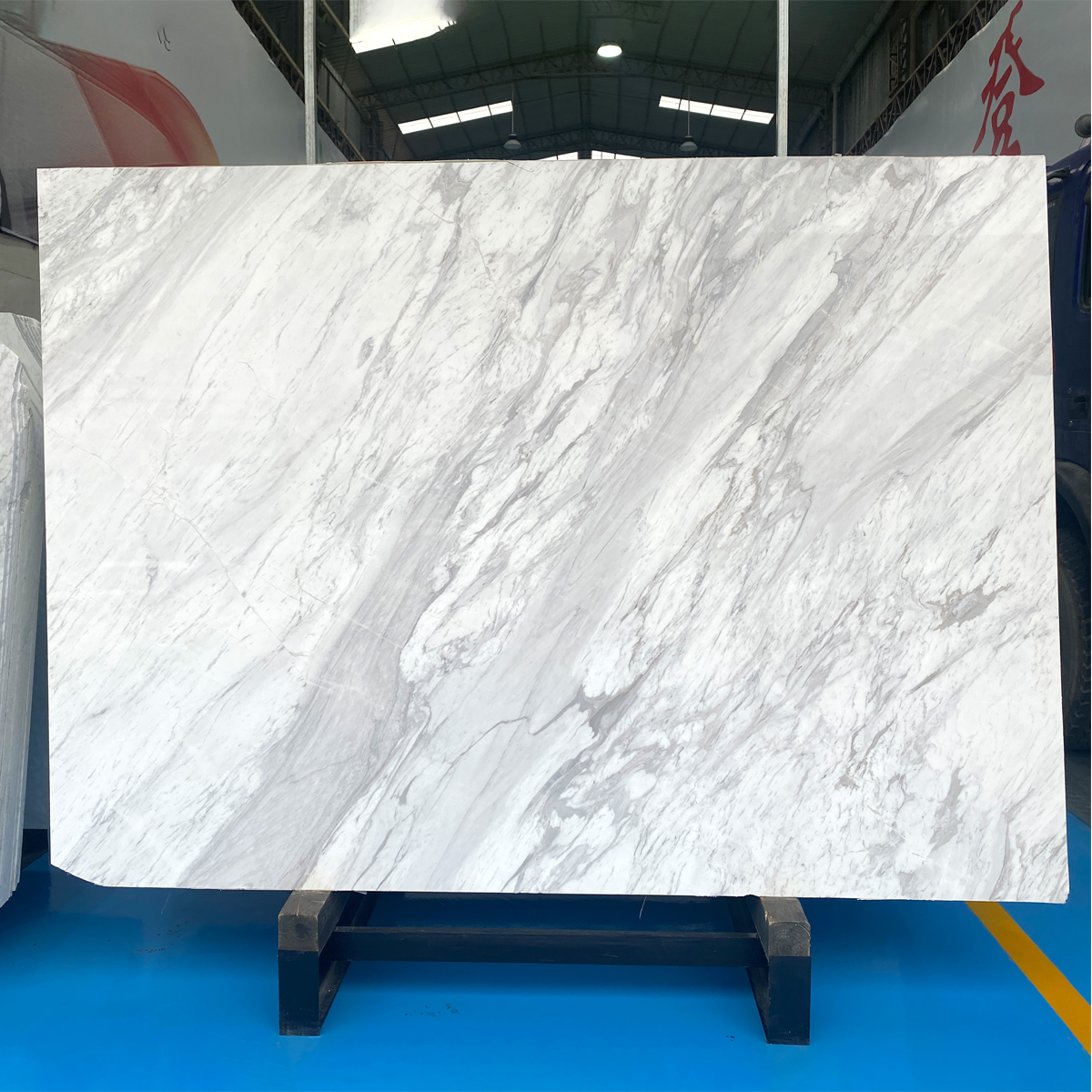
→ Browse kitchen-grade marble → Part of the Marble Kitchen Countertop series. Published by FutureStone Group — direct marble manufacturer. Request kitchen marble samples →
Marble kitchen and installation specification hub
This stain-risk article is part of FutureStone's marble kitchen and installation specification hub. It helps project buyers separate true staining from etching, then connect prevention with sealer limits, cleaning rules, edge details, slab selection and maintenance handoff.
Buyer intent: stain prevention and etch-risk checklist for marble kitchen countertops, islands, backsplashes, vanity tops, wet bars and high-use stone surfaces.
Stain prevention and etch-risk checklist
- Separate stain from etch: dark absorbed marks are usually stains; dull or rough light marks are often etching from acids or harsh cleaners.
- Seal correctly: sealer slows absorption but does not stop acid etching, heat damage, poor cleaning or unrealistic maintenance habits.
- Specify by use: kitchens, bars, islands and vanities need different guidance for oils, wine, coffee, citrus, cosmetics and hard water.
- Handover clearly: give the owner pH-neutral cleaner, blotting steps, water-test interval, stain response method and supplier contact details.
For connected specification decisions, review the marble installation guide, marble slab thickness guide, marble countertop edge profile guide, dry-hang vs wet-lay marble wall guide, marble stain removal guide, and marble bathroom design guide.
For sourcing, compare marble materials, kitchen countertop project context, basin and tub project context, then contact FutureStone with slab choice, finish, use area, maintenance concerns and project drawings.
Marble countertop stain FAQ
Is a marble countertop stain the same as etching?
No. A stain is absorbed color or oil inside the stone pores. Etching is surface damage from acidic or harsh products that dulls or roughens the marble finish.
Can sealing stop all kitchen stains?
No. Sealing slows absorption and gives more cleanup time, but it cannot prevent acid etching, scratches, heat shock or every deep oil mark.
What should a marble kitchen care handoff include?
Include pH-neutral cleaner, blotting rules, sealer review interval, stain response steps, acid warnings, cutting board guidance and a contact path for professional repair.
Marble countertop stain prevention and RFQ handoff
When a buyer is comparing a new marble countertop, replacement slab, restoration scope or maintenance package, the quotation should state the stain-risk assumptions instead of treating every dark mark as the same problem. Confirm the stone, finish, sealer status, expected use, cleaning handoff and repair responsibility before comparing suppliers or approving a replacement.
Marble countertop stain RFQ handoff checklist
- Stone and finish: identify the marble, background color, finish, surface treatment, sealer or coating and the approved sample that the supplier must match.
- Use and exposure: state whether the surface is a kitchen countertop, island, backsplash, vanity, bar, hotel counter or replacement piece, and note contact with wine, coffee, oil, citrus, cosmetics, hard water or heat.
- Existing-condition evidence: attach stain or etch photos, the age of the mark, cleaning products already used, water-test or sealing records and a side-light photo where the finish looks dull or rough.
- Replacement or fabrication scope: include slab or cut-to-size dimensions, thickness, edge profile, sink and cooktop cut-outs, backsplash relationship, seam positions, quantity, tolerances and shop-drawing approval.
- Maintenance handoff: request pH-neutral cleaner guidance, blotting steps, sealing interval, prohibited products, stain-response instructions, spare-piece information and the escalation path for professional repair.
- Commercial and delivery terms: confirm inspection stage, repair or replacement responsibility, packing, crate marks, shipping term, destination, delivery schedule and whether installation or restoration is included.
For a complete project quotation, connect this maintenance brief with the marble material range, the kitchen countertop project context, the marble installation handoff guide and the marble finish comparison. Send the stone type, finish, dimensions, photos, quantity, destination and maintenance requirements through FutureStone Contact.
Marble countertop stain RFQ FAQ
What should a marble countertop stain and maintenance RFQ include?
Include the stone and finish, sealer status, use area, stain or etch photos, cleaning history, dimensions, thickness, edge and cut-out details, replacement or restoration scope, maintenance handoff, packing, delivery and responsibility for repair or replacement.
How should a supplier quote marble countertop stain risk?
The supplier should separate absorbed staining, acid etching, finish wear and fabrication or installation damage, then state the approved material, finish, care limits, inspection evidence, repair scope, replacement assumptions and exclusions. A generic stain-remover promise is not a complete project quotation.
Need a material or project recommendation?
Share the page, material target or project requirement with our team.