
The edge profile of your marble countertop is a small detail with outsized impact. It's where your hand rests while cooking, what you see at eye level while seated at a bar stool, and the line that defines the countertop's visual weight.
Choosing the right profile is a balance of aesthetics, safety, durability, and cost. This guide covers all ten standard options.
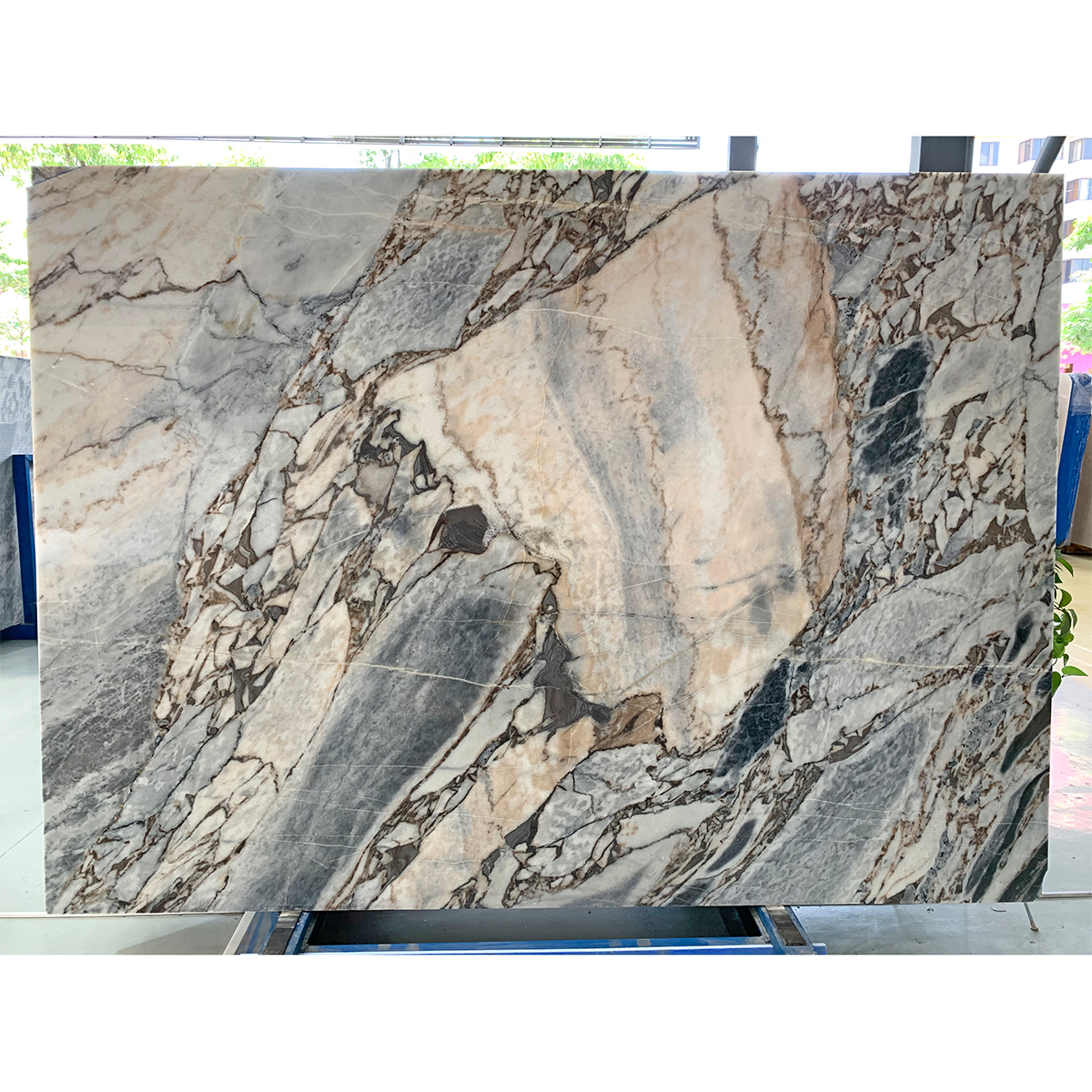
The 10 Standard Edge Profiles
| # | Profile | Cross-Section | Best Kitchen Style | Safety | Cost |
|---|---|---|---|---|---|
| 1 | Eased (Straight) | Flat top, sharp 90° edges with micro-bevel | Modern, Contemporary, Minimalist | ⚠️ Sharp corners | $ |
| 2 | Bevel (Chamfer) | 45° cut on top edge | Transitional, Scandinavian | ✅ Softened | $ |
| 3 | Bullnose (Full Round) | Fully rounded top edge (half-circle) | Traditional, Family, Mediterranean | ✅ Safest — no sharp edges | $$ |
| 4 | Half Bullnose (Demi) | Rounded top edge only, flat bottom | Transitional, Casual | ✅ Safe | $$ |
| 5 | Ogee | S-curve with step — classical decorative | Traditional, Formal, Grand | ✅ Rounded | $$$ |
| 6 | DuPont | Stepped profile — upper curve + lower shelf | Luxury Traditional, Estate | ✅ Multi-curved | $$$$ |
| 7 | Mitered | Two slabs joined at 45° to create thick appearance | Modern Luxury, Contemporary | ⚠️ Depends on outer edge | $$$ |
| 8 | Waterfall | Countertop continues vertically to the floor | Ultra-Modern, Statement Islands | ✅ Continuous surface | $$$$ |
| 9 | Laminated (Stacked) | Two pieces bonded for double thickness | Any style needing visual weight | Varies by outer profile | $$$ |
| 10 | Pencil Round | Subtle rounding — barely visible radius | Minimalist, Clean Modern | ✅ Slightly softened | $ |
Detailed Profile Guide
1. Eased (Straight Edge)
| Factor | Detail |
|---|---|
| Look | Clean 90° edge with a micro-bevel (1–2 mm) to prevent chipping |
| Thickness appearance | Shows exact slab thickness (2 cm or 3 cm) |
| Best marble | Any — profile doesn't compete with veining |
| Kitchen style | Contemporary, minimalist, industrial |
| Pros | Clean, modern, inexpensive, showcases the natural slab edge |
| Cons | Sharp corners can chip on impact; not ideal for families with small children |
2. Bevel (Chamfer)
| Factor | Detail |
|---|---|
| Look | 45° angle cut along the top edge (typically 5–10 mm deep) |
| Thickness appearance | Slightly reduces visual thickness from the top |
| Best marble | Works universally |
| Kitchen style | Transitional, Scandinavian, casual modern |
| Pros | Subtle sophistication; catches light along the bevel; safer than straight |
| Cons | Minimal — this is the safest, most versatile default choice |
3. Bullnose (Full Round)
| Factor | Detail |
|---|---|
| Look | Full half-circle roundover on the top edge |
| Thickness appearance | Softens the edge, looks slightly thinner |
| Best marble | Beige and warm marbles suit the traditional feel |
| Kitchen style | Traditional, Mediterranean, family kitchens |
| Pros | Safest profile — no sharp edges; comfortable for leaning; durable (no chip points) |
| Cons | Can look dated in ultra-modern kitchens |
4. Ogee
| Factor | Detail |
|---|---|
| Look | Elegant S-curve with a step — classical European moulding profile |
| Thickness appearance | Makes the counter look thicker and more substantial |
| Best marble | Classic whites (, ) and warm beiges |
| Kitchen style | Traditional, formal, luxury estate |
| Pros | Dramatic, decorative, signals craftsmanship |
| Cons | Higher fabrication cost; dust collects in the curves; can feel ornate in modern settings |
5. Mitered Edge
| Factor | Detail |
|---|---|
| Look | Two slabs joined at 45° to create the illusion of 4–6 cm thickness |
| Thickness appearance | Appears 2–3× actual thickness — maximally substantial |
| Best marble | Bold-veined marbles: Calacatta Viola, Sofitel Gold |
| Kitchen style | Modern luxury, contemporary |
| Pros | Dramatic visual weight without dramatic actual weight; shows vein pattern on the edge face |
| Cons | Requires precision CNC fabrication; the miter joint is a potential weak point |
| Fabrication note | FutureStone's CNC capability ensures tight, seamless mitered joints |
6. Waterfall Edge
| Factor | Detail |
|---|---|
| Look | Countertop slab continues vertically down the side of the island to the floor |
| Thickness appearance | N/A — creates a wall of marble |
| Best marble | Bold-veined varieties for maximum drama: Calacatta Viola, |
| Kitchen style | Ultra-modern, statement kitchens |
| Pros | The most dramatic kitchen design element possible; hides island cabinetry on the sides; veins flow from top to floor |
| Cons | Highest cost (3 slabs from same block); requires precise vein matching at the miter corner |
| Material requirement | 3 consecutive slabs from one block for top + 2 ends |
Edge Profile Selection by Kitchen Style
| Kitchen Style | Best Edge | Why |
|---|---|---|
| Ultra-modern / minimalist | Eased or pencil round | Clean lines, no ornamentation |
| Scandinavian | Bevel or pencil round | Subtle, understated elegance |
| Transitional | Half bullnose or bevel | Bridges modern and traditional |
| Traditional / formal | Ogee or DuPont | Classical detail signals craftsmanship |
| Mediterranean / rustic | Full bullnose | Soft, warm, inviting |
| Modern luxury | Mitered (4–6 cm illusion) | Thick, substantial, contemporary premium |
| Statement island | Waterfall | Maximum drama and design impact |
| Family kitchen | Bullnose or half bullnose | Safety first — no sharp corners for children |
Cost Comparison
| Profile | Fabrication Cost (per linear meter) | Typical Island (6 linear meters) |
|---|---|---|
| Eased / pencil round | $10–20/m | $60–120 |
| Bevel | $15–25/m | $90–150 |
| Bullnose / half bullnose | $20–35/m | $120–210 |
| Ogee | $35–60/m | $210–360 |
| DuPont | $50–80/m | $300–480 |
| Mitered | $40–70/m + second slab for edge strip | $240–420 + material |
| Waterfall | Material cost for 2 additional side slabs + fabrication | $1,000–5,000+ (depends on marble variety) |
Perspective: On a $5,000 marble island, the edge profile cost typically represents 5–15% of the total — yet it defines 100% of the countertop's visual character when viewed from standing or seated position. Don't default to the cheapest option; match the profile to your design intent.
Thickness + Edge Profile Combinations
| Slab Thickness | Best Profiles | Visual Result |
|---|---|---|
| 2 cm | Eased, bevel, pencil round | Sleek, modern, lightweight |
| 2 cm + mitered edge | Appears 4–6 cm | Substantial modern luxury without actual weight |
| 3 cm | Any profile works well | Standard premium — thick enough for ogee and DuPont details |
| 3 cm + laminated | Appears 6 cm | Maximum visual weight — grand and imposing |
FAQs
Can I change the edge profile after the countertop is installed? Technically yes — a stone fabricator can re-profile an installed countertop edge. However, it's messy (stone dust, water), limited in scope (can remove material but not add it), and expensive. Always finalize your edge profile before fabrication, not after installation.
Which edge profile is strongest? Bullnose and half bullnose are the most chip-resistant because there are no sharp corners to catch impact. Eased edges and ogee profiles have more vulnerable points. For high-use kitchens, prioritize rounded profiles.
What about undermount sink edges? The most popular edge for undermount sink cutouts is a small eased or bevel edge (not decorative) — it creates a clean transition and avoids chipping during daily use. Bullnose works well too. Avoid ogee or DuPont at sink cutouts — the intricate profile collects water and is harder to clean.
Professional Recommendations by Application
Beyond kitchens, edge profiles matter for other marble surfaces too:
| Application | Recommended Profile | Why |
|---|---|---|
| Kitchen countertop | Eased, bevel, or half bullnose | Clean, practical, easy to fabricate |
| Kitchen island (statement) | Mitered waterfall or DuPont | Maximum visual impact |
| Bathroom vanity | Eased or bevel | Clean lines; smaller scale doesn't need ornate profiles |
| Coffee table top | Full bullnose or eased | Safety for exposed edges at sitting height |
| Dining table top | Eased with 3 mm radius | Modern, tactile, comfortable arm rest |
| ** treads** | Full bullnose nosing | Safety — rounded edge prevents tripping and injury |
| ** mantel** | Ogee or lamb's tongue | Traditional elegance; decorative profile suits feature position |
| Window sill | Eased or bevel | Minimal profile keeps focus on the view |
 Part of the Marble Kitchen Countertop series. Published by FutureStone Group — direct marble manufacturer with CNC fabrication. View factory →
Marble kitchen and installation specification hub
This edge-profile article is part of FutureStone's marble kitchen and installation specification hub. It connects design style with fabrication tolerance, safety, sink cut-outs, waterfall panels, mitered edges, slab thickness and quotation details.
Buyer intent: countertop edge profile fabrication checklist for bullnose, bevel, eased, ogee, mitered, laminated and waterfall marble kitchen details.
Countertop edge profile fabrication checklist
- Match use and style: choose eased or bevel edges for clean kitchens, bullnose for softer handling, ogee for classic rooms and waterfall edges for statement islands.
- Check fabrication risk: mitered and waterfall edges need accurate slab layout, vein matching, corner strength and dry-fit review.
- Coordinate thickness: edge profile choice depends on 2 cm or 3 cm slab thickness, support, apron design and exposed side panels.
- Quote precisely: include edge drawings, sink cut-outs, cooktop cut-outs, overhangs, backsplash, polishing requirement and packing marks.
For connected specification decisions, review the marble installation guide, marble slab thickness guide, marble countertop stain guide, dry-hang vs wet-lay marble wall guide, marble stain removal guide, and marble bathroom design guide.
For sourcing, compare marble materials, kitchen countertop project context, basin and tub project context, then contact FutureStone with countertop drawings, edge profile, slab thickness, cut-outs, finish and destination.
Marble countertop edge FAQ
Which marble countertop edge profile is best for a kitchen?
An eased or small bevel edge is usually the most practical for modern kitchens. Ogee, bullnose, mitered and waterfall edges can work when the design, slab thickness and fabrication budget support them.
Are waterfall marble edges harder to fabricate?
Yes. Waterfall edges need accurate mitering, vein alignment, panel support, dry-fit review and careful packing because the vertical slab is highly visible.
What should an edge profile RFQ include?
Include drawings, edge name, slab thickness, overhang, sink and cooktop cut-outs, backsplash, finish, quantity, crate marks and installation sequence.