
Marble mosaic definition and project guide
Marble mosaic is a decorative surface made from small pieces of natural marble that are cut, sorted and assembled into a repeat, geometric, floral, border or custom inlay pattern. The pieces may be supplied as loose tesserae, mesh-backed sheets, waterjet-cut shapes or a coordinated medallion, depending on the design and installation method.
The existing marble mosaic tile collection is useful for browsing product options. This article explains what marble mosaic is, how the formats differ, where it can be used and which specifications should be confirmed before a custom order.
Marble mosaic types and pattern formats
| Format | Typical use | What buyers should approve |
|---|---|---|
| Small tesserae or chip mosaic | Bathroom walls, backsplashes, shower features, borders and decorative panels | Piece size, mesh sheet size, joint width, color mix, slip requirements and installation orientation |
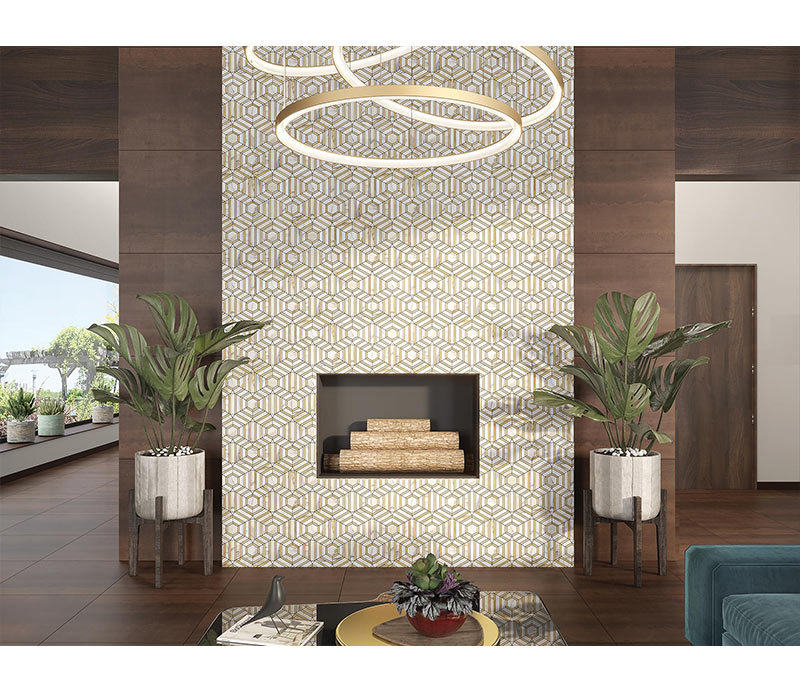
| Geometric or linear pattern | Floor fields, entry halls, corridors, hotel bathrooms and feature walls | Repeat dimension, rotation, border transition, shade range, dry-lay layout and replacement pieces |
| Waterjet inlay or medallion | Entry floors, hotel lobbies, villas, restaurants and statement architectural floors | Full-size drawing, piece numbering, stone palette, cut tolerance, central alignment, edge border and installation sequence |
| Custom mixed-stone design | Logo panels, floral motifs, artwork, stair risers, niches and coordinated interior packages | Vector or CAD file, material legend, finish, mesh or backing method, sample panel and approval of natural variation |
Where marble mosaic can be used
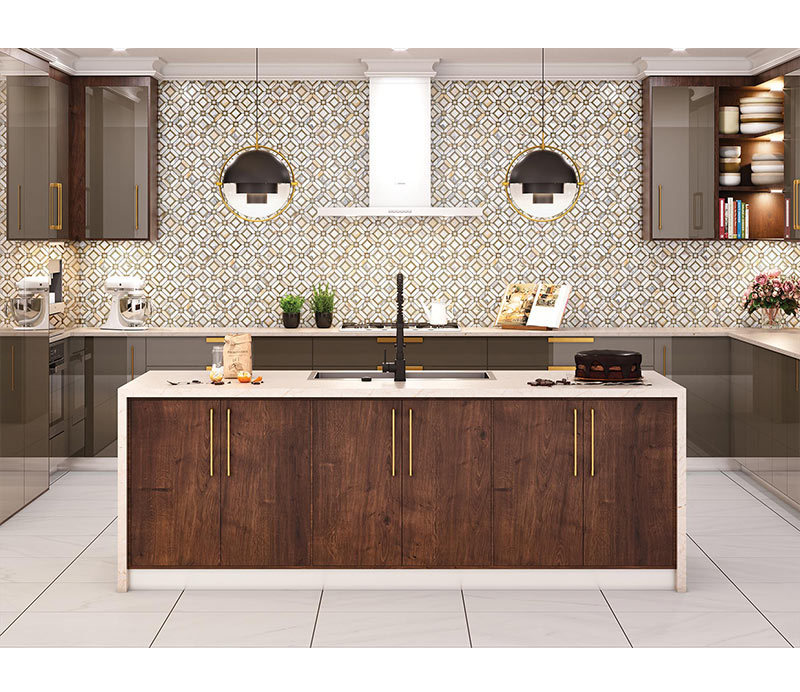
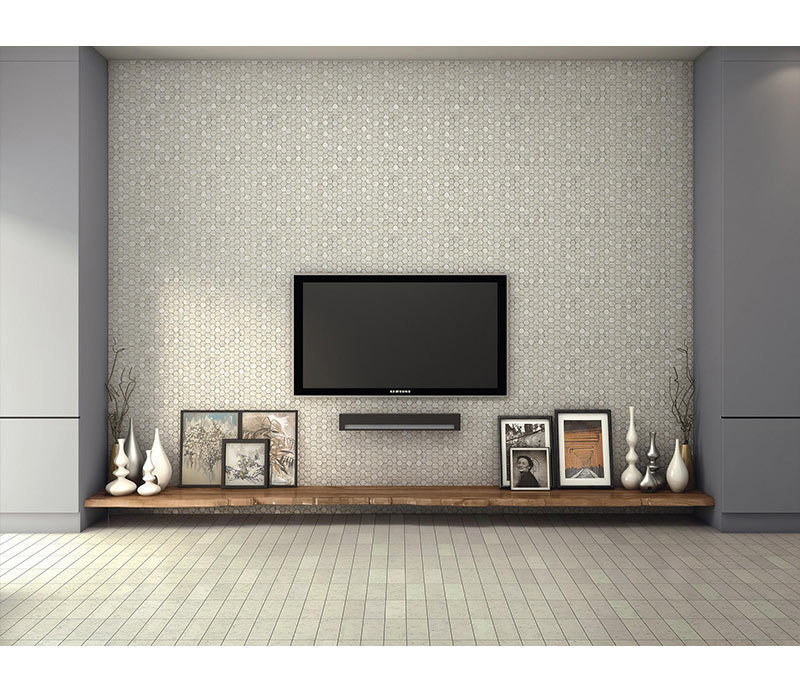
- Walls and backsplashes: confirm substrate flatness, sheet direction, joint color, edge trim and how the pattern meets outlets, niches or cabinetry.
- Floors and entry halls: confirm thickness, slip performance, traffic level, transition to surrounding slabs, border geometry and dry-lay sequence.
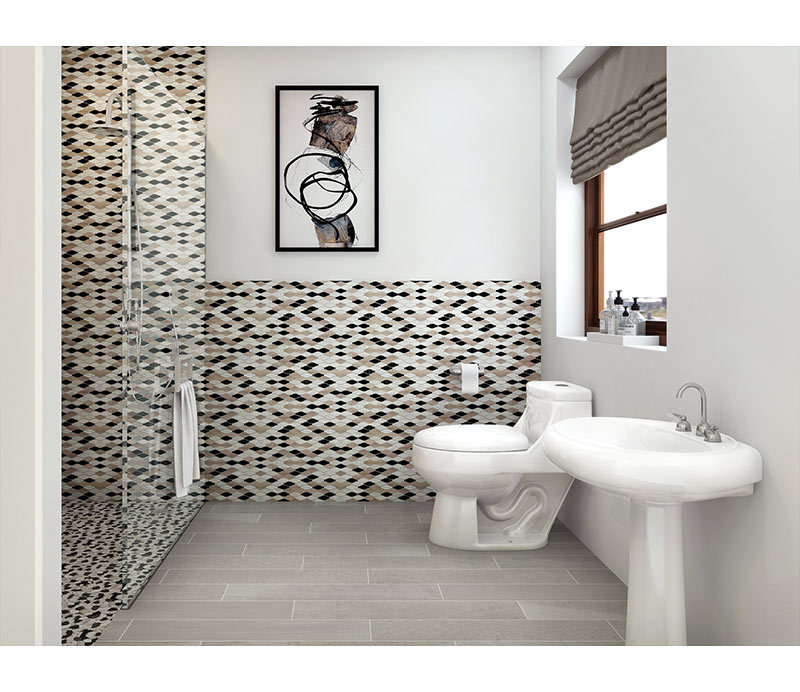
- Bathrooms and wet areas: coordinate waterproofing, slope, drainage, grout, maintenance and the selected finish before approving the final pattern.
- Hotels, villas and retail interiors: create a room or area schedule, repeat the approved palette, label sheets or pieces and reserve replacement material for future repairs.
- Waterjet and decorative inlay: approve the CAD or vector artwork, stone legend, numbering, cut direction, assembly drawing and full-size sample before batch cutting.
Marble mosaic specification and approval checkpoints
A natural stone mosaic is not only a picture or color combination. The finished result depends on the individual piece size, stone thickness, backing, joint, finish, variation and the conditions of the installation area. Confirm these details against a real sample or dry lay.
- Material: marble name, acceptable alternatives, background tone, vein direction, shade range, fissure or repair tolerance and the current slab or block source.
- Format: loose pieces or mesh-backed sheets, piece dimensions, sheet dimensions, thickness, edge treatment, border size and repeat or medallion diameter.
- Surface: polished, honed, brushed, tumbled or textured finish, slip expectations, grout color and the maintenance requirements for the room.
- Layout: pattern orientation, border transitions, room schedule, dry-lay approval, piece numbering, replacement allowance and installation sequence.
- Packaging: sheet or piece labels, protective separators, crate dimensions, moisture protection, packing list, crate marks and loading photos for export delivery.
Custom marble mosaic RFQ handoff checklist
For a comparable quotation, send the supplier a complete design and installation brief:
- Design package: reference images, CAD or vector artwork, plans, elevations, sections, repeat dimensions, border details, quantity and target areas.
- Material palette: preferred marble, acceptable alternatives, color or vein direction, finish, sample requirement and tolerance for natural variation.
- Fabrication scope: piece or sheet size, mesh or backing, waterjet cutting, edge profile, numbering, dry lay, mock-up and shop drawing approval.
- Site conditions: substrate, waterproofing or drainage, slope, traffic, temperature, installation adhesive, grout, access and local installation responsibility.
- Commercial and export scope: prototype or batch quantity, lead time, inspection photos, replacement pieces, crate dimensions, gross weight, Incoterm and destination unloading.
Compare the mosaic tile collection for product-level formats, then review waterjet medallion applications for custom inlay work and wall and floor tile projects for installation context. Use the marble collection to shortlist stone and send the artwork, dimensions, quantity and destination to FutureStone for a marble mosaic quotation.
FAQ
What is marble mosaic made from?
Marble mosaic is made from small pieces of natural marble that are cut, sorted and assembled into a pattern. It may be supplied as loose tesserae, mesh-backed sheets, waterjet-cut pieces or a larger medallion, depending on the design and installation requirements.
Can marble mosaic be used on floors and wet areas?
It can be used when the selected stone, finish, thickness, substrate, waterproofing, drainage, grout and slip requirements are suitable for the area. Confirm the room conditions and approve a real finish or sample layout before production and installation.
What should be included in a custom marble mosaic RFQ?
Include the artwork or CAD file, pattern and repeat size, plans and elevations, stone palette, piece or sheet dimensions, thickness, finish, border, quantity, sample or dry-lay requirements, installation conditions, packing, delivery term and destination.
Need a material or project recommendation?
Share the page, material target or project requirement with our team.