








In contemporary residential design, the coffee table functions as the visual and functional anchor of the seating group, guiding circulation and acting as a platform for lighting, books, and styling objects. When that table is crafted from marble, it also becomes a permanent stone element in an otherwise soft environment of textiles and wood, which is why it appears so frequently in villas, penthouses, and boutique hotel lounges.
Future Stone Group manufactures marble coffee tables in premium stones such as Calacatta Viola, Hermes Grey, and beige travertine, supplied as complete furniture or as tops for custom bases, giving architects and designers control over both aesthetics and performance. With a full stone gallery of natural marble, onyx, travertine, granite, quartz, and engineered surfaces, the group supports projects ranging from single high‑end residences to international hospitality and retail programs.
Step 1: Start from space, not from the stone
Every successful coffee‑table specification begins with the room and sofa, not with a catalog image, because the table must sit correctly within the circulation and proportions of the seating layout. Designers typically start by measuring the sofa width, seat height, and the clear distances required for walking and legroom, then use those numbers to define an allowable envelope for the table.
A widely used guideline is to set coffee‑table length at roughly two‑thirds of the main sofa length, which maintains visual balance and ensures that most seated users can comfortably reach the surface. For example, with a 2.1 m sofa, a coffee table of around 1.3–1.5 m in length usually reads as intentional rather than underscaled or oversized.
Clearance is equally important: coffee‑table sizing guides recommend 40–50 cm between the front of the sofa and the table edge to allow users to pass through and sit without awkward twisting. In practical terms, if the room is tight, it is often better to reduce length or depth slightly rather than compromise that zone, especially when specifying heavy marble that will not be moved casually.
Step 2: Height, ergonomics, and comfort
Height is usually defined in relation to the sofa seat so that the table feels natural for everyday use, including placing drinks, laptops, and books. Most expert sources place the optimal coffee‑table height in the 40–46 cm range, either level with the top of the sofa cushion or up to about 2–5 cm lower.
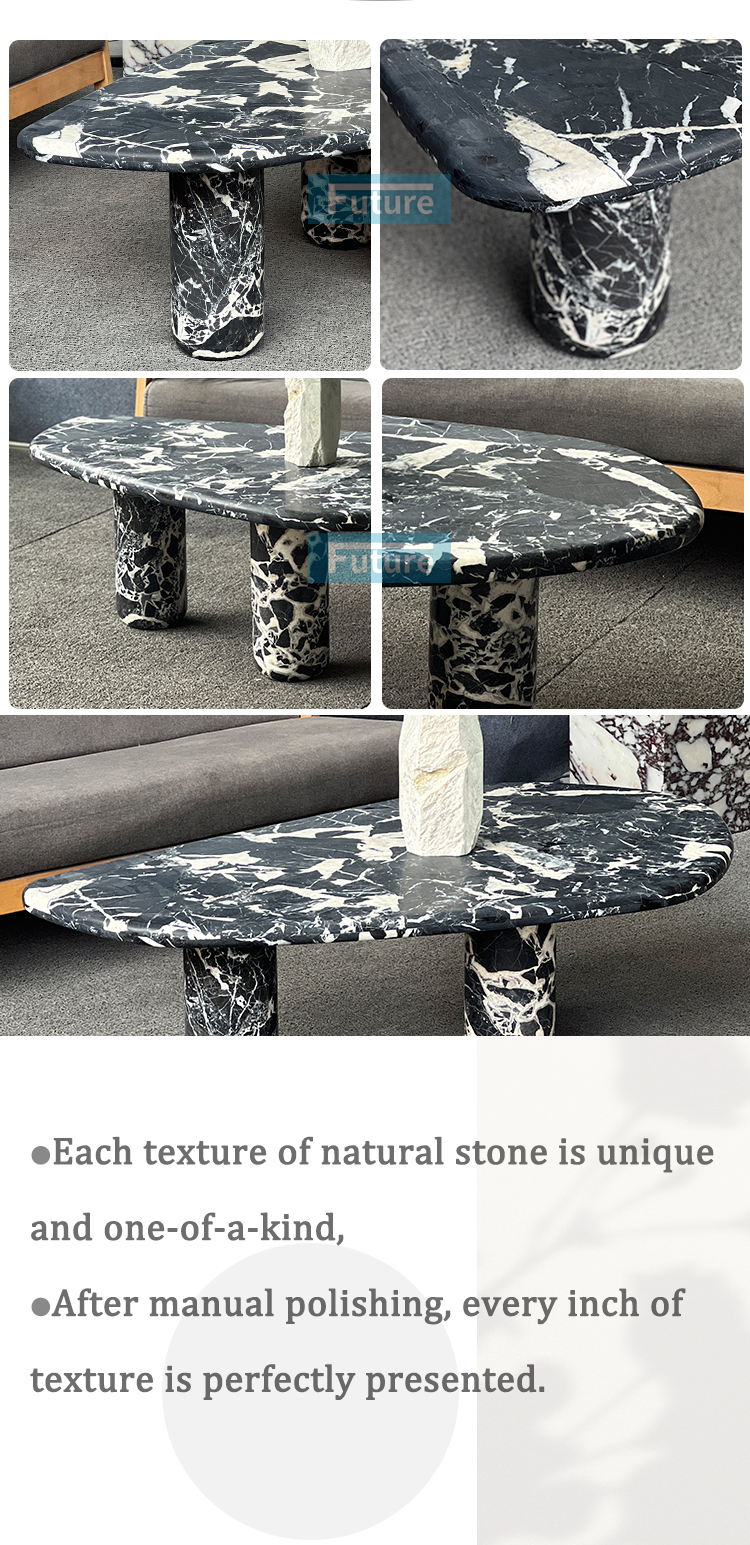
Tables that are significantly higher than the seat can feel intrusive and visually heavy, especially with solid stone tops, while tables much lower than 40 cm can be uncomfortable for anything beyond casual lounging. For low, lounge‑style seating—common in wabi‑sabi and contemporary villas—Future Stone Group’s low plinth marble designs deliberately sit closer to the floor, but are always coordinated with seat height during the design phase.
In family living rooms where the table may double as a work surface for children or casual dining, specifying closer to cushion height improves usability, whereas in more formal sitting rooms, slightly lower, more sculptural pieces are often preferred for their unobtrusive profile.
Step 3: Choosing the ideal shape for your layout
Shape is primarily driven by the seating arrangement and circulation paths, and each geometry brings specific spatial effects. Rectangular marble coffee tables reinforce linear layouts and are particularly strong in front of straight sofas or within symmetrical arrangements of opposing sofas.
Rectangular proportions create a clear visual axis in the room, helping to define traffic flow and supporting more formal compositions, which is why they are common in larger villas and hotel lobbies. Future Stone Group’s Calacatta Viola and Hermes Grey rectangular tops are often specified in North American and European projects where clients want a strong architectural statement to anchor large living spaces.
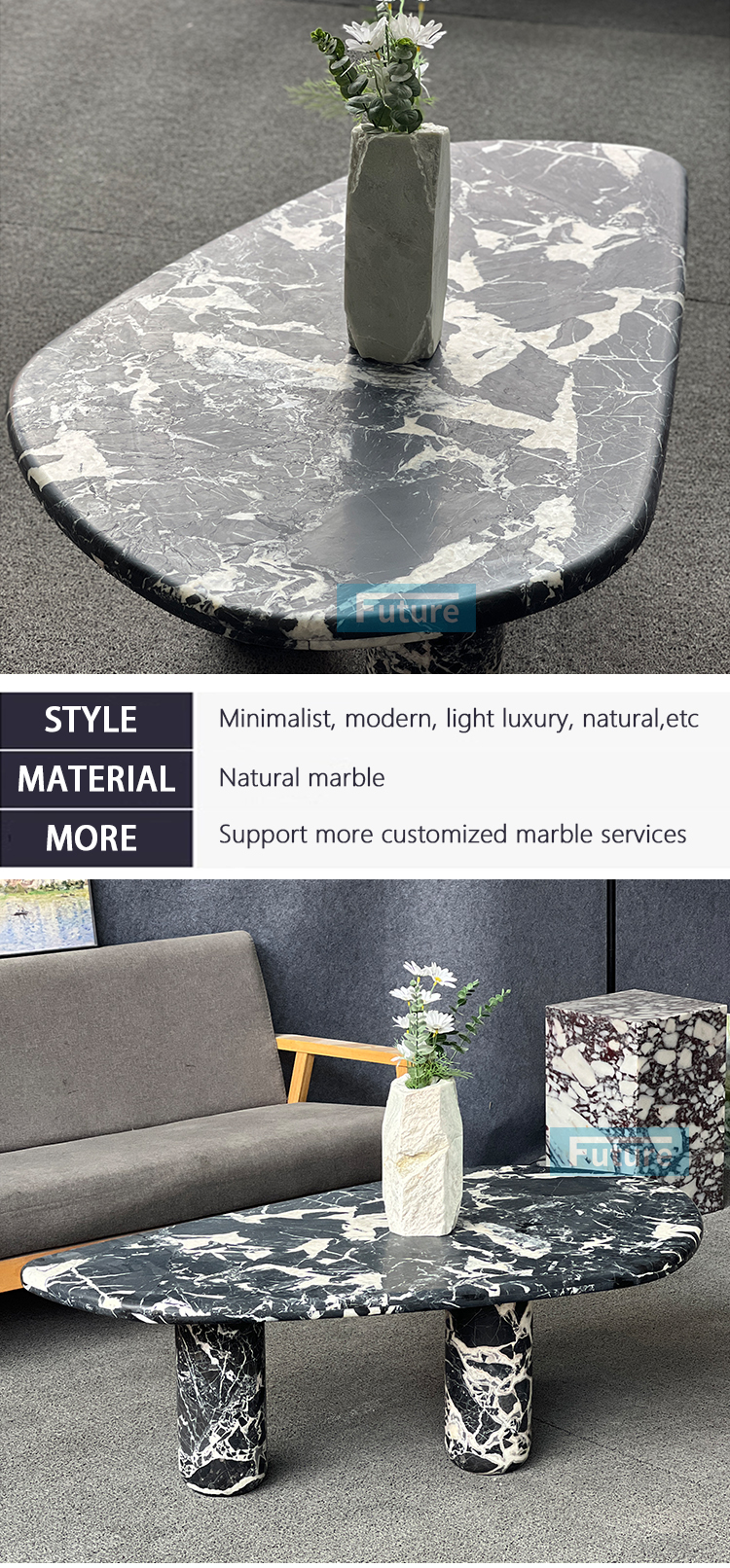
Round and oval marble tables introduce softness and are especially effective in compact living rooms or where circulation passes closely around the seating area. The absence of sharp corners reduces impact risk and visually relaxes rigid layouts, making round or elliptical Wabi‑sabi‑style plinth tables a popular choice in contemporary apartments and family homes.
Square or modular cluster tables suit more symmetrical seating plans, such as two sofas facing each other, or L‑shaped sectionals that need coverage across both legs of the “L”. Designers often specify two smaller marble blocks or nesting tables rather than a single large slab, gaining flexibility for events and easier movement during cleaning.
Step 4: Selecting the right marble — aesthetics and performance
The choice of stone defines the visual temperature of the room and influences maintenance, patina, and cost. Classic white and grey marbles such as Carrara provide a soft, neutral base with gentle veining that works effortlessly in Scandinavian, minimalist, and transitional interiors, while remaining relatively forgiving of daily wear when properly sealed.
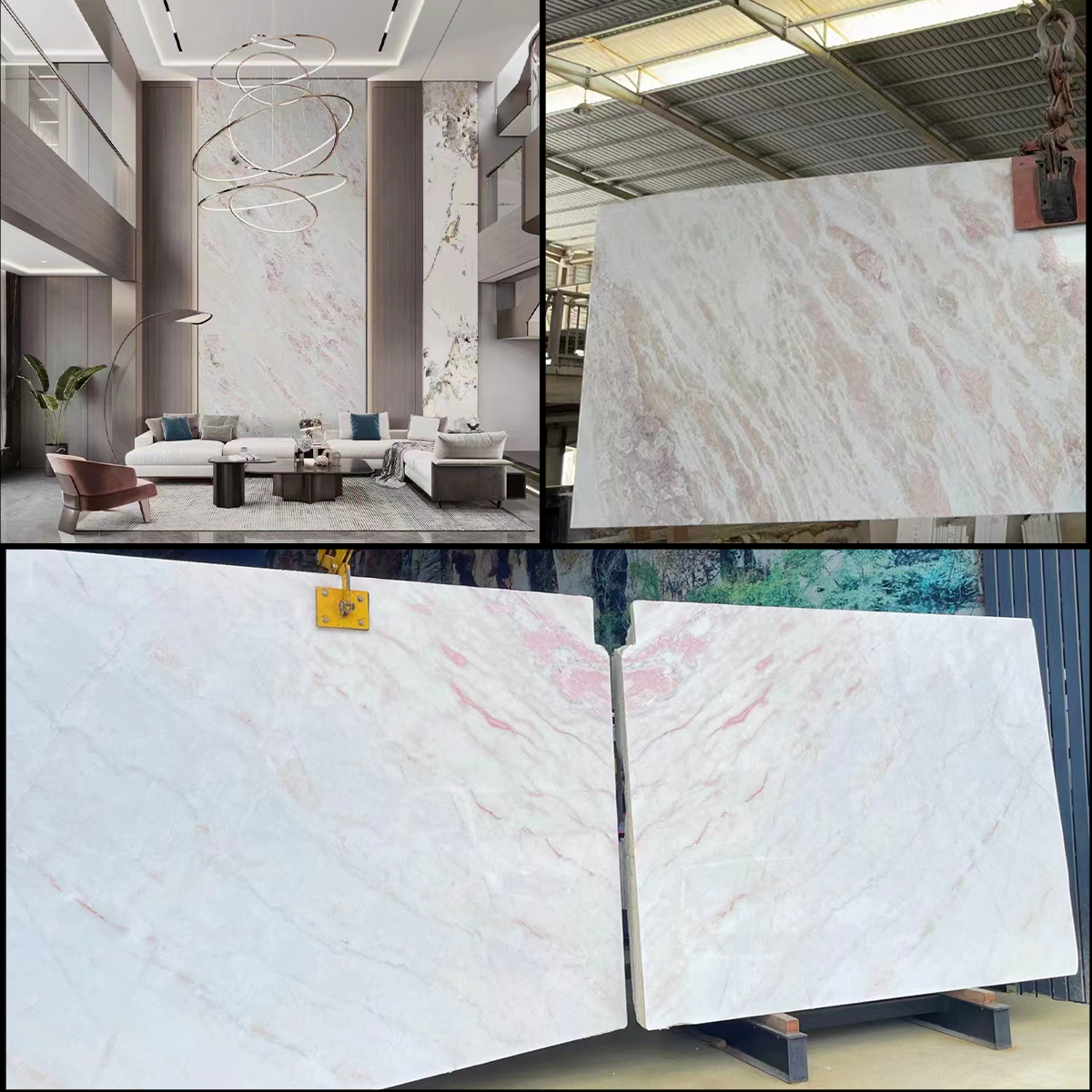
Calacatta Viola, one of Future Stone Group’s signature offerings, features a light background with dramatic purple, burgundy, and wine‑toned veining that can turn a coffee table into the primary artwork in the room. This stone is frequently chosen for statement pieces in luxury villas and penthouse projects, where designers pair it with simple metal or stone plinth bases to highlight the geological patterning.
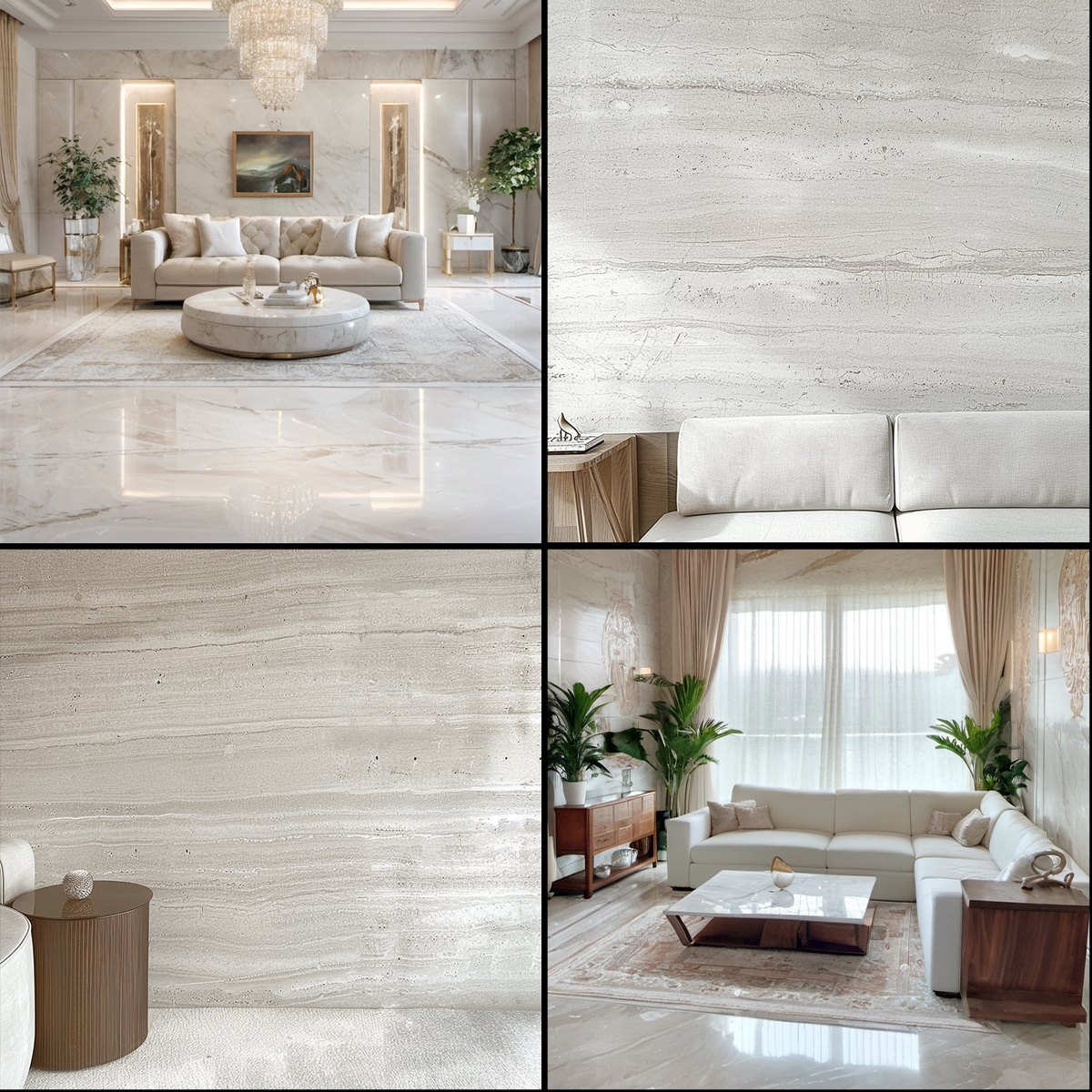
Black Marquina (Nero Marquina) provides a deep black field with high‑contrast white veining, delivering a sharp, graphic effect that reads particularly well with light upholstery and brass or black metal accents. For clients seeking a more grounded and intimate mood, warm brown and beige marbles such as Emperador or soft travertine add earthiness and pair well with linen, timber, and textured plaster finishes.
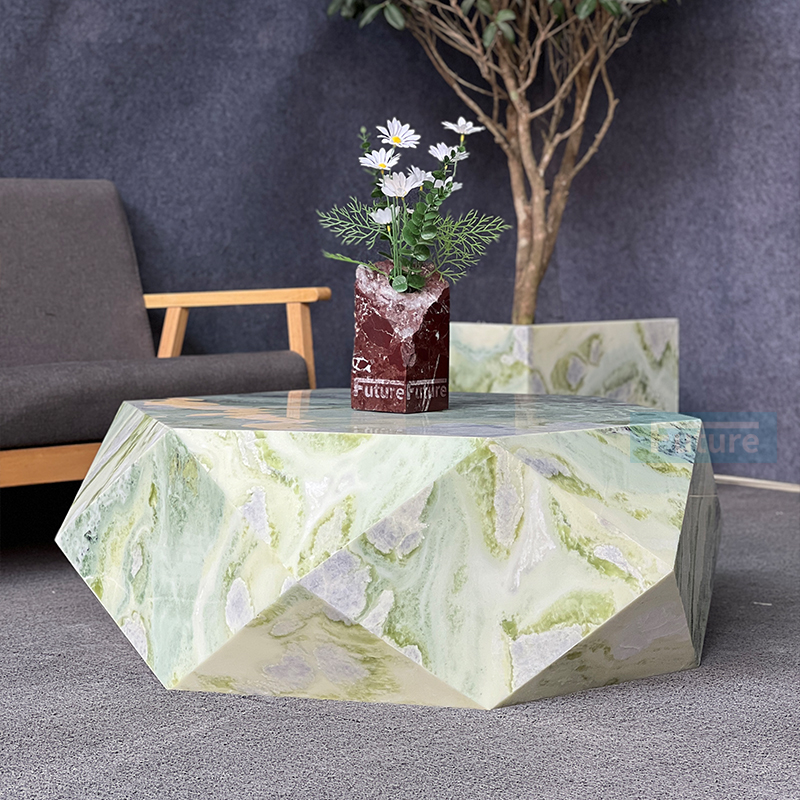
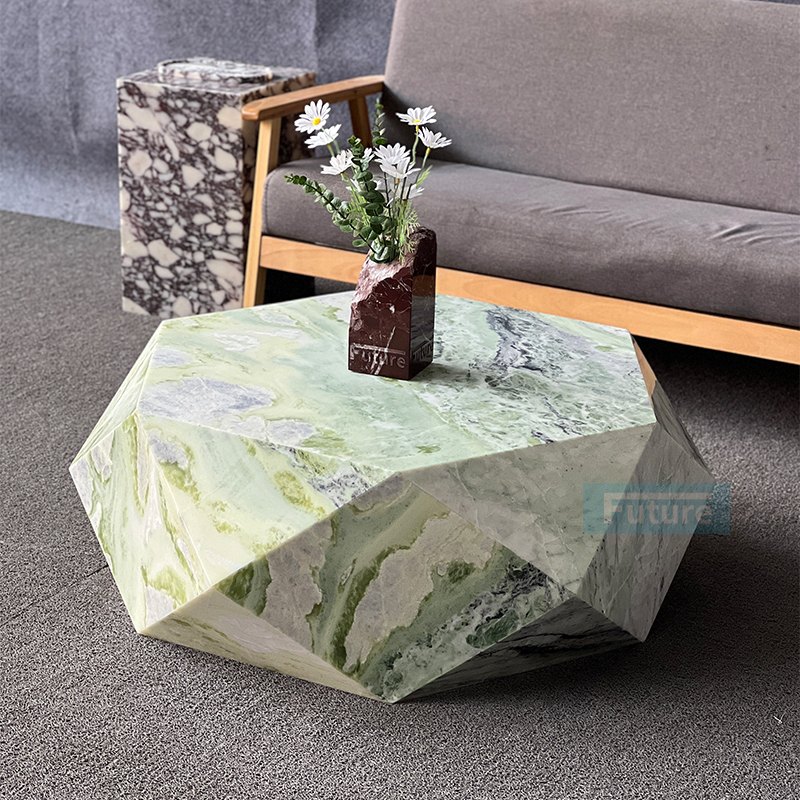
Future Stone Group’s stone gallery showcases over 50 luxury marbles, onyxes, and quartzites, allowing specifiers to match exact tones and vein movement to project palettes, including niche colours like Twill Green and Rosa‑toned marbles for more daring schemes. For projects that demand higher stain and scratch resistance with a marble‑like appearance, engineered quartz or other engineered stone tops can be specified, combining the group’s furniture designs with surfaces optimized for performance.
Step 5: Base materials and structural engineering
Marble is inherently heavy and rigid, so its supporting structure must be engineered to distribute load and resist tipping and deflection. Industry discussions around high‑end coffee tables note that well‑designed pieces should withstand at least 90 kg of vertical load without structural failure, which is a realistic scenario when adults lean, sit, or place heavy objects on the top.
For marble‑topped coffee tables, this means avoiding undersized legs or narrow contact points that concentrate stress and instead using sufficiently broad frames, plinths, or reinforced pedestals that spread weight across the slab. Quality manufacturers typically join stone tops to metal bases using recessed threaded inserts or specialised structural adhesives, rather than visible surface screws that compromise both aesthetics and load paths.
Metal bases in powder‑coated steel, iron, or brass are common because they combine slender visual lines with strong supporting capacity, allowing the marble to appear to “float” while remaining secure. Future Stone Group’s collections also include solid stone plinth bases in matching or contrasting marble, which produce a monolithic sculptural effect and are especially suited to Wabi‑sabi and gallery‑like interiors.
For family homes and hospitality spaces, specifiers should consider base designs that minimise outward‑projecting corners and tripping points, particularly where robotic cleaners and high traffic are expected. In all cases, the final design should be reviewed for stability on the specific floor finish, with felt or rubber interfaces added as required to prevent slipping and protect timber or stone flooring.
Step 6: Thickness, finish, and edge details
Tabletop thickness is both a structural and aesthetic decision: thicker slabs communicate solidity and luxury, but they add significant weight and can make smaller rooms feel heavy. Many high‑end coffee tables use effective thicknesses of 20–30 mm for solid slabs, or built‑up edges that create the impression of greater mass while keeping actual weight and cost manageable.
Finish affects both appearance and maintenance: polished marble offers a high‑gloss surface that intensifies colour and veining and delivers reflectance values that can exceed 65% when finished to around 800‑grit or higher. Honed or matte finishes reduce glare, make small scratches and etches less visible, and are often preferred in contemporary, wabi‑sabi, or family‑oriented interiors where a softer look and forgiving surface are desirable.
Edge profiles—such as eased, chamfered, or soft bullnose—are more than aesthetic; they directly influence chip resistance and safety. Slightly eased or chamfered edges reduce the likelihood of minor impact chips on exposed corners and are recommended in family homes, while sharper arrises may be reserved for formal, low‑traffic spaces where crisp geometry is a priority.
Step 7: Practical performance — durability, pros, and cons
Marble has a unique combination of characteristics: it is hard, heat‑resistant, and long‑lasting, yet also porous and sensitive to acids, which creates both advantages and responsibilities for the end user. Properly maintained marble coffee tables can last decades and even be passed between generations, acquiring a subtle patina that many clients associate with authenticity and heritage.
On the positive side, marble’s compressive strength and thermal stability make it ideal for hot cups and moderate mechanical loads without warping or melting, unlike some synthetic surfaces. On the other hand, sharp metal objects can scratch, and spills of wine, citrus, or coffee can etch unprotected surfaces, especially on polished finishes.
Weight is another double‑edged factor: a marble coffee table is inherently stable and difficult to tip, which is beneficial in busy living rooms, but that same mass makes frequent rearrangement or solo moving impractical. For clients who regularly reconfigure layouts, designers can specify slightly smaller tops, lighter bases, or engineered stone alternatives to moderate total weight while preserving the look of natural stone.
Step 8: Maintenance, sealing, and client education
Long‑term satisfaction with a marble coffee table depends on realistic expectations and a simple, consistent maintenance routine. Most marble‑care experts recommend sealing the surface periodically—often every 6–12 months depending on use and product type—to reduce porosity and slow the absorption of liquids.
Daily cleaning should be done with a soft cloth and pH‑neutral cleaner or mild soap, avoiding acidic or abrasive products such as vinegar, lemon‑based sprays, or scouring powders that can damage the stone surface. Spills should be blotted quickly rather than wiped across the surface, then followed by a gentle clean and thorough drying to prevent moisture halos.
A practical test many professionals use is to place a few drops of water on the surface: if they are quickly absorbed and the stone darkens, the sealer has likely worn off and the table should be resealed according to the sealer manufacturer’s instructions. Future Stone Group advises trade clients and homeowners on suitable sealing and care systems for each stone type in its collection, helping ensure that specification decisions are backed by realistic maintenance plans.
Step 9: Budget, value, and project positioning
The cost of marble coffee tables varies widely with stone rarity, size, edge complexity, and base design, with market guides indicating a range from entry pieces around 300 USD to custom or designer tables exceeding 2,500 USD. For professional specifiers, the key is to align budget with the visual prominence of the piece and the overall project positioning, investing more where the table functions as a central brand statement, such as in a villa living room or penthouse show suite.
Future Stone Group supports both one‑off luxury pieces and volume projects through direct manufacturing and global distribution, offering wholesale pricing for architects, interior designers, and developers via its own channels and trade platforms. This allows specifiers to choose between premium marbles such as Calacatta Viola for hero pieces, and more cost‑effective yet elegant stones or engineered surfaces for secondary spaces and emerging‑market developments.
Step 10: A practical specification checklist
For architects, designers, and contractors preparing tender or shop‑drawing information, it is helpful to treat the marble coffee table like any other technical element, with a concise specification. Key points typically include:
- Plan dimensions (length, width/diameter) related to sofa length and circulation clearances.
- Overall height in relation to seat height and intended uses (lounging, laptop work, formal entertaining).
- Stone type, colour, and veining direction (for example, Calacatta Viola with longitudinal vein orientation).
- Stone thickness, construction (solid or built‑up edges), and finished edge profile.
- Surface finish (polished, honed, brushed) and any special treatments or proprietary finishes.
- Base material, finish, and construction details, including fixing method between stone and base.
- Load‑bearing and stability requirements in line with relevant furniture standards or project‑specific criteria.
- Maintenance notes, sealing schedule, and cleaning guidance to be included in handover documentation.
Future Stone Group’s engineering and design teams routinely assist clients with this documentation, providing slab selection photos, technical drawings, and material data to streamline approvals from concept stage through to installation.
Conclusion: Turning stone into a signature
Selecting the perfect marble coffee table for a living room is not simply a matter of choosing a beautiful stone; it requires careful calibration of proportion, geometry, structural engineering, and long‑term performance. By starting with room measurements, clarifying functional needs, and then matching the right marble, finish, and base to the project’s aesthetic and maintenance expectations, specifiers can deliver pieces that feel both luxurious and quietly practical.
With deep expertise in natural and engineered stone, a broad library of premium marbles such as Calacatta Viola and Black Marquina, and dedicated support for architects and designers, Future Stone Group is positioned as a trusted partner for transforming these considerations into finished coffee tables that anchor living rooms around the world. For projects in both established and emerging markets, this combination of technical rigor and material beauty ensures that each marble coffee table is not only a focal point today, but a durable investment in the long‑term character of the home.